
You walked onto the court thinking you were just going to hit a ball around with friends. Sixty minutes later you are drenched, your legs are shaking, your forearms are burning, and you are already planning your next game. Sound familiar?
That is padel. It disguises a serious workout inside a sport that feels like pure fun. Most people never realize how hard their body is working until they check their watch and see the numbers. So let us break down exactly what happens inside your body during one hour of play, from the muscles firing to the calories disappearing to the things you cannot see but definitely feel the next morning.
You are burning more calories than you think
A single hour of padel burns somewhere between 400 and 700 calories depending on your weight, your fitness level, and how hard you go. A casual rally with friends puts you in the 400 range. A competitive match where every point matters can push you past 700. For context, that is comparable to an hour of running, cycling, or a high intensity gym class.
The difference is that running for an hour feels like running for an hour. Padel feels like playing a game with your friends while music thumps from the speakers and someone makes a shot so ridiculous the whole court laughs. The calories disappear and you barely noticed because your brain was too busy tracking the ball.
This is not a small thing. The number one reason people quit fitness routines is boredom. You cannot get bored in padel because the game never lets your mind wander. Every rally is different. Every point is a puzzle. And that is exactly why people who start playing keep playing.
The muscles doing the work

Your legs, core and arms are all firing for the full hour.
Padel is a full body sport, but not all muscles carry the same load. Here is where you will feel it most.
Legs and glutes
Your lower body does the heaviest lifting. Quadriceps fire every time you push off, lunge for a low ball, or change direction. Hamstrings stabilize your knees during those sharp lateral movements. Calves absorb the constant start and stop. And your glutes, the largest muscle in your body, power every sprint, every jump, and every explosive push to the net. If you have ever wondered why your legs feel like concrete the day after your first game, this is why. The court is small but the movement is relentless.
Core
Every swing of the racket starts in your core. Your abdominals, obliques and lower back muscles rotate your torso, stabilize your balance during direction changes, and transfer power from your legs into your shots. You are not doing sit ups, but your core is working the entire time. Players who train regularly in padel often notice improved posture and a stronger midsection without ever stepping into a gym.
Arms, shoulders and chest
Your deltoids lift and rotate your arm for volleys and overheads. Your triceps extend the arm on smashes and power shots. Your biceps control the racket on defensive returns. Your forearms and wrists are engaged on every single contact with the ball, absorbing impact and guiding spin. And your chest muscles engage on those cross body shots where you drive through the ball. It is not the isolated pump of a bicep curl. It is functional strength that builds through real, varied movement.
Your heart is running intervals without being told
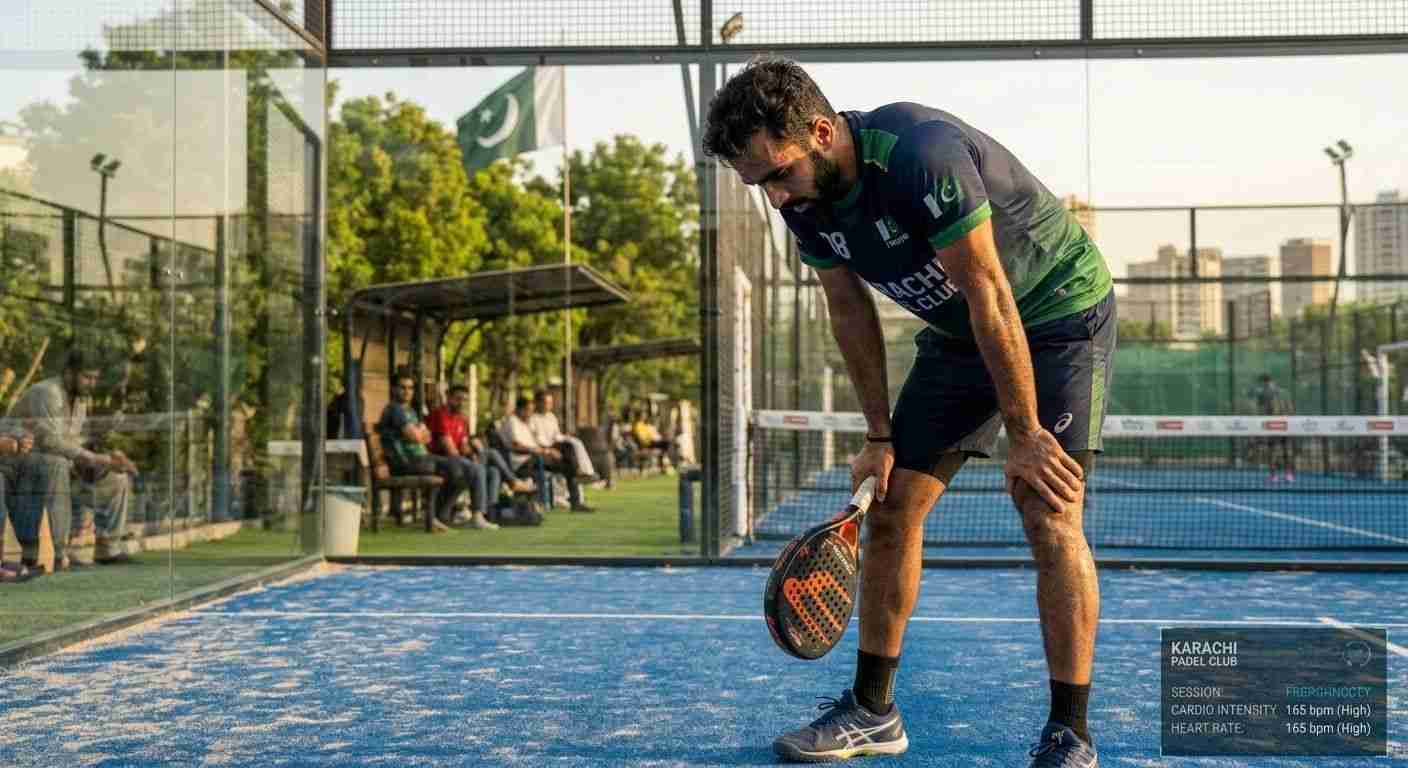
Padel keeps your heart rate in the optimal training zone for a full hour.
Here is the part most people miss. Padel is not steady state cardio. It is natural interval training. You sprint for a ball, recover during the serve, explode again, then catch your breath. Your heart rate climbs, drops, climbs again. This pattern mirrors what trainers call high intensity interval training, the kind of cardio that builds endurance and burns fat more effectively than a flat pace jog.
Studies show that during a typical padel match, heart rates sit between 140 and 160 beats per minute, roughly 70 to 80 percent of maximum. That puts you squarely in the zone where your cardiovascular system adapts and improves. Regular players see lower resting heart rates over time, better oxygen uptake, and improved recovery between efforts. One peer reviewed study found that racket sports like padel can reduce the risk of cardiovascular related mortality by up to 59 percent. Not a typo. Fifty nine percent.
And unlike a treadmill where you have to will yourself to keep going, the game itself drives the intensity. You do not choose to sprint. The ball makes you. The effort is involuntary and that is what makes it sustainable.
What it does to your head

The mental reset is half the reason people keep coming back.
Physical exercise triggers the release of endorphins, dopamine and serotonin. You already knew that. But padel layers on two things a solo workout cannot. First, it demands strategic thinking. You are reading the court, predicting the opponent, choosing between a lob and a smash, making split second decisions under physical fatigue. That cognitive load pulls your mind completely out of whatever stress you carried onto the court.
Second, it is inherently social. You are always playing with three other people. You celebrate together, you commiserate together, you build something that is equal parts sport and friendship. Research has shown that social sports produce stronger long term mental health benefits than solitary exercise because the connection itself is therapeutic. Players consistently report sleeping better, feeling calmer, and carrying less anxiety on the days they play.
It sounds like a lot to claim from hitting a ball against glass walls. But the combination of physical intensity, mental engagement and social bonding is genuinely rare in a single activity. Most things give you one of the three. Padel gives you all of them in the same hour.
How padel stacks up against other workouts
|
|---|
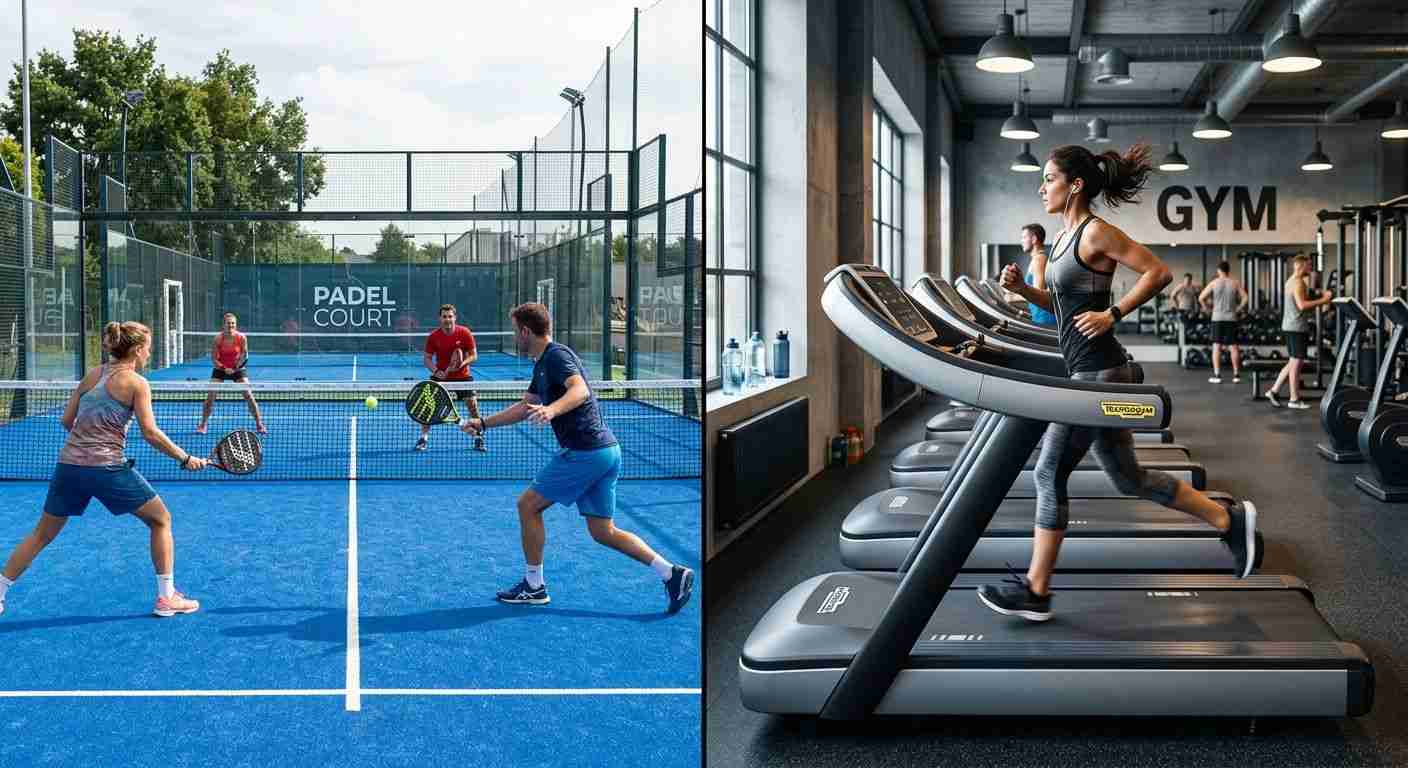
Padel matches the calorie burn of a gym session with none of the monotony.
The numbers tell only part of the story. What the table cannot show is that padel sits in a rare spot where the effort is high enough to change your body but the experience is enjoyable enough that you actually show up every week. The best workout is the one you do consistently. For a growing number of people in Pakistan, that workout is padel.
Who benefits most
The beauty of padel is that it scales. A complete beginner playing their first slow rally is still getting a full body workout, just at a lower intensity. A competitive player in a fast match is pushing close to elite athlete effort levels. Your body adapts as your game improves, so the workout grows with you.
It is especially valuable for anyone who has fallen off a gym routine, hates running, or finds solo exercise hard to stick with. The social glue of a regular padel group makes skipping feel harder than showing up. And unlike a gym membership you use for three weeks in January, padel tends to become a habit because it never feels like a chore.
Frequently asked questions
How many calories does padel burn?
Between 400 and 700 calories per hour depending on your weight, fitness level and game intensity. Competitive matches burn more. Casual games still burn plenty.
What muscles does padel work?
It is a full body sport. Legs and glutes carry the biggest load from the constant movement and direction changes. Core muscles stabilize and rotate through every shot. Arms, shoulders and chest power your swings and volleys.
Is padel good cardio?
Very. Heart rates during a match typically sit between 140 and 160 beats per minute, which is the interval training zone where cardiovascular fitness improves most. Studies link racket sports to significantly reduced risk of heart disease.
Is padel better than going to the gym?
It depends on your goals. A gym lets you isolate specific muscles and follow a precise program. Padel gives you a full body workout, cardio, coordination and a social experience all in one session. For most people, the biggest advantage of padel is that they actually keep doing it.
Can beginners get a good workout from padel?
Yes. Even slow, casual rallies involve constant movement, and the walls keep the ball in play longer, so beginners spend more time active and less time picking up missed shots. The workout grows as your skill and intensity increase.
Ready to feel it for yourself? Book your padel slot with On Spot and let one hour on the court do what an hour at the gym wishes it could.